Electrochemical Solutions for Hospital Wastewater Treatment
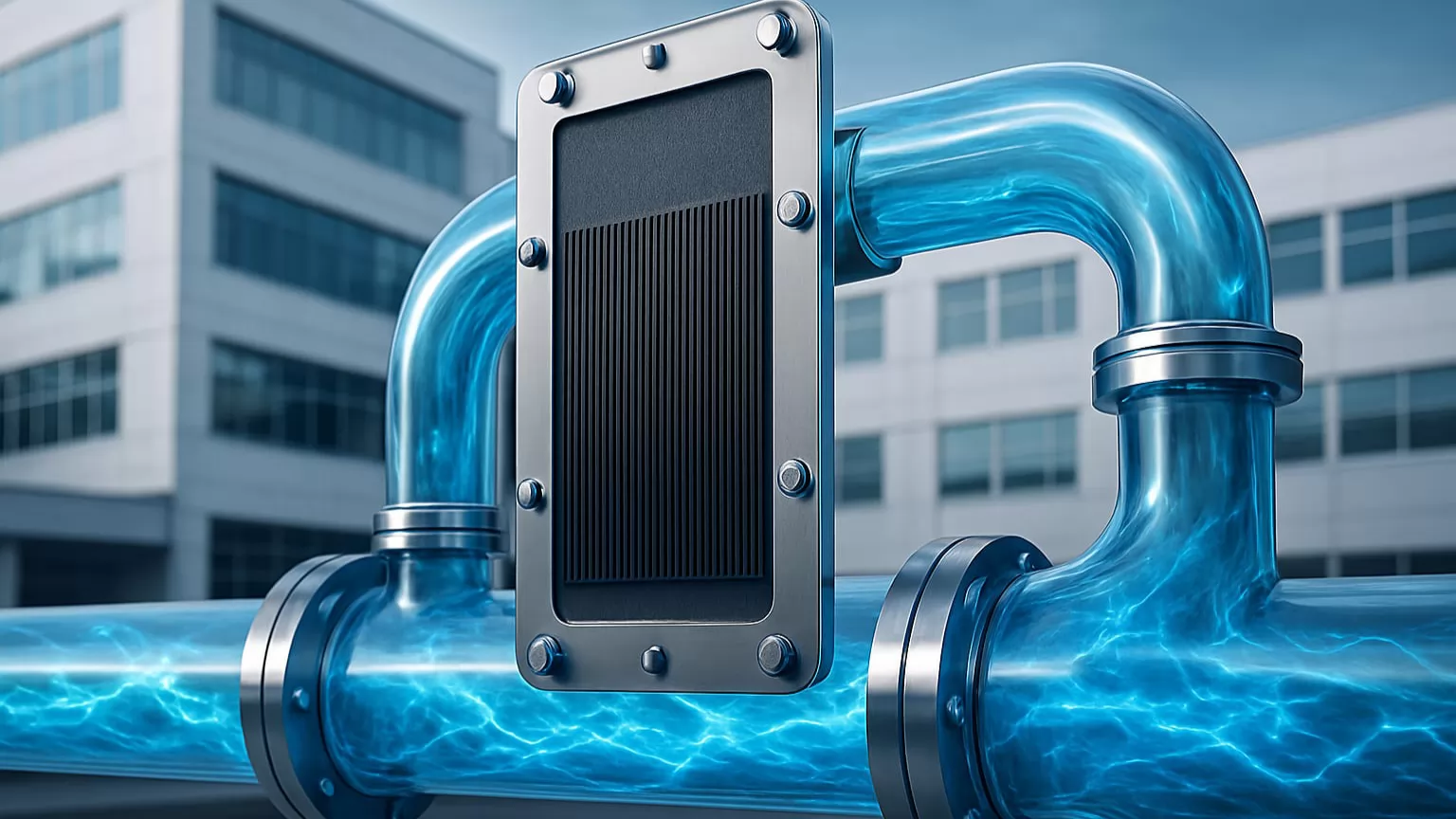
Hospital wastewater (HWW) presents a unique and escalating global challenge that transcends conventional water treatment paradigms. Unlike municipal sewage, HWW is a complex cocktail of high-risk contaminants, including active pharmaceutical ingredients (APIs), contrast media, disinfectants, and, most critically, Antibiotic-Resistant Microorganisms (ARMs) and their associated Antibiotic Resistance Genes (ARGs). The presence of these micropollutants poses a direct threat to public health and environmental integrity, driving a critical need for advanced, reliable treatment technologies.
As a leading manufacturer of high-performance titanium anodes, JH Ti Anode is at the forefront of providing core components for Electrochemical Advanced Oxidation Processes (EAOPs)—the most promising solution for HWW deep purification.
The Invisible Threat: Why Conventional Treatment Fails

Traditional biological treatment methods, such as the Activated Sludge Process (ASP), were designed primarily to remove bulk organic matter (BOD/COD) and suspended solids. They are fundamentally ill-equipped to handle the specific characteristics of HWW:
- Non-Biodegradability of Pharmaceuticals (PhACs): Many modern drugs, including chemotherapy agents and hormones, are designed to be chemically stable and pass through the human body largely unchanged. This stability makes them resistant to microbial degradation in conventional sewage treatment plants [1].
- AMR Hotspots: Hospitals are recognized as major sources of ARMs and ARGs. When HWW is discharged, even after partial treatment, these resistant pathogens can transfer their resistance genes to environmental bacteria, accelerating the spread of "superbugs" in natural water bodies [2].
- Fluctuating Load and High Toxicity: HWW flow and composition can vary dramatically, often containing high concentrations of toxic substances that inhibit the microbial activity essential for biological treatment.
Consequently, conventional treatment often results in the discharge of water that is clear but still biologically hazardous, failing to meet the increasingly stringent global regulatory standards for emerging contaminants.
The Regulatory Imperative for Advanced Treatment
The global trend in water regulation is shifting from simply measuring BOD/COD to controlling specific micropollutants. Regulatory bodies worldwide are recognizing the urgency of HWW treatment:
- European Union: The Water Framework Directive and subsequent legislation are pushing for the monitoring and reduction of priority substances, many of which are PhACs.
- World Health Organization (WHO): The WHO emphasizes the need for robust HWW management systems, particularly focusing on the inactivation of infectious agents and the safe disposal of hazardous liquid waste.
This regulatory pressure mandates the implementation of tertiary treatment or advanced oxidation processes (AOPs) at the hospital site or before co-treatment with municipal sewage.
Electrochemical Advanced Oxidation: The Mechanism of Destruction
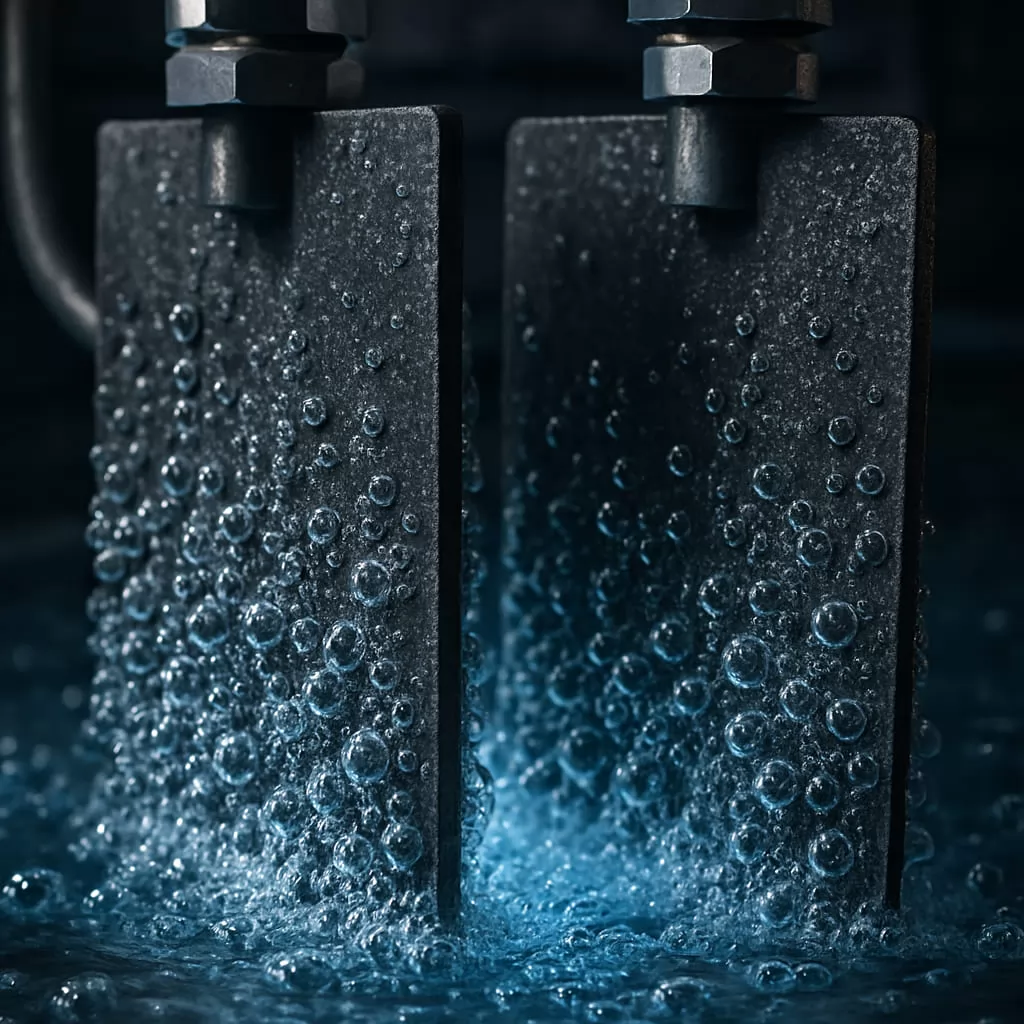
EAOPs represent a paradigm shift in HWW treatment. They utilize electricity to generate powerful, short-lived oxidizing species that can mineralize recalcitrant organic compounds and effectively inactivate pathogens.
The core of this process is the generation of the hydroxyl radical (•OH)—one of the most potent oxidants known, second only to fluorine.
Anode Reaction: H2O → •OH + H+ + e−
The hydroxyl radical reacts non-selectively with almost all organic molecules, breaking them down into harmless end products like CO2 and H2O. This mechanism ensures the destruction, not just the transfer, of pollutants.
JH Ti Anode: Engineering the Core of EAOPs
The efficiency, energy consumption, and longevity of any EAOP system are fundamentally determined by the anode material. At JH Ti Anode, we specialize in manufacturing Dimensionally Stable Anodes (DSAs), commonly known as MMO (Mixed Metal Oxide) coated titanium anodes, which are perfectly suited for the harsh environment of HWW treatment.
Tailored Anode Coatings for HWW
We provide customized anode solutions based on the specific treatment goal:
| Anode Type | Primary Coating | HWW Application Focus | Key Performance Advantage |
|---|---|---|---|
| Ir-Ta MMO Anodes | Iridium & Tantalum Oxide | High-efficiency COD and PhACs mineralization (High Oxygen Evolution Potential) | Superior catalytic activity for hydroxyl radical generation; long service life. |
| Ru-Ir MMO Anodes | Ruthenium & Iridium Oxide | Disinfection and Chlor-Alkali Generation (Low Chlorine Evolution Potential) | Optimized for in-situ generation of active chlorine species (HClO/ClO−) for robust disinfection. |
| Pt-Ir Coated Anodes | Platinum & Iridium | High-current density applications and complex matrixes | Excellent stability and corrosion resistance in highly acidic or basic conditions. |
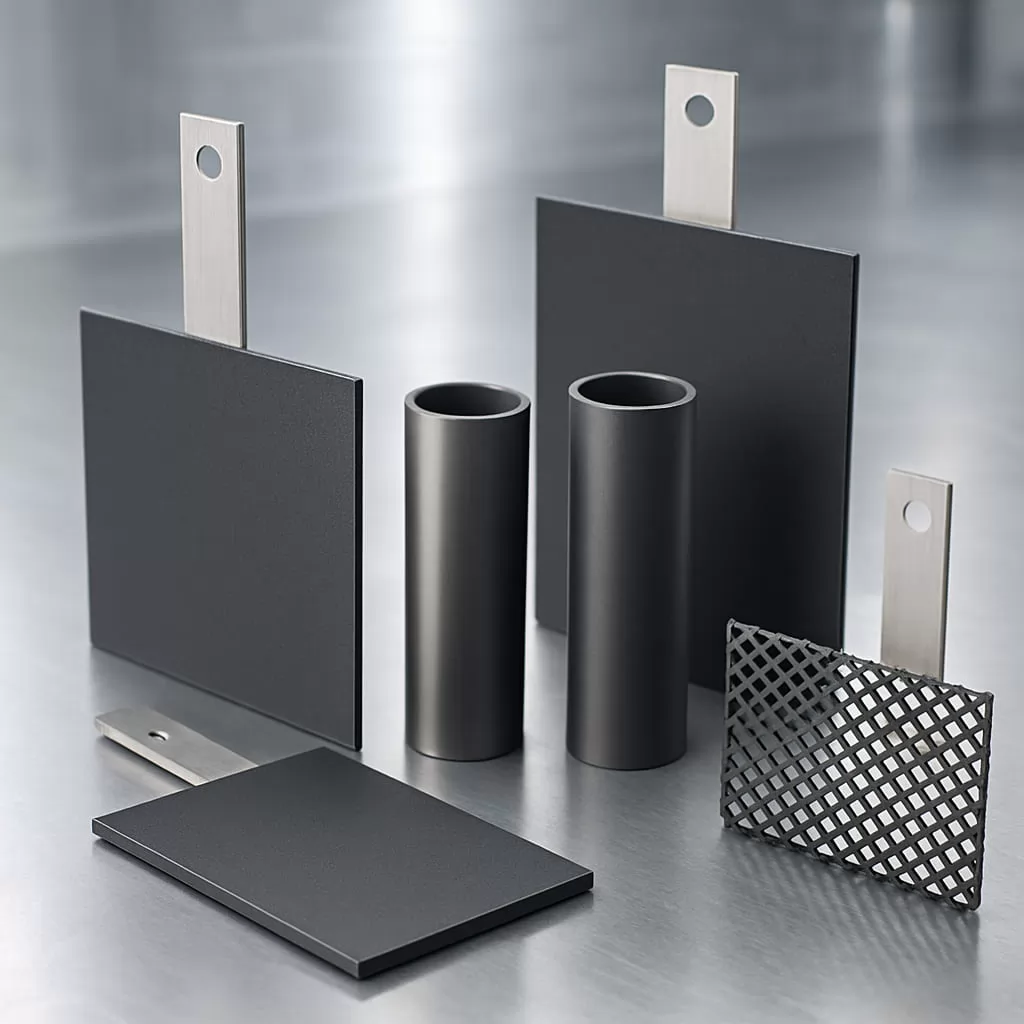
The Critical Role of Coating Formulation
The performance of a titanium anode is entirely dependent on the proprietary coating formulation and preparation process. Our manufacturing process ensures:
- High Electrocatalytic Activity: Maximizing the rate of hydroxyl radical generation per unit of energy consumed.
- Exceptional Adhesion: Ensuring the MMO coating remains firmly bonded to the titanium substrate, even under high current density and fluctuating loads, which is crucial for maximizing anode lifespan.
- Dimensional Stability: The titanium substrate provides mechanical strength and corrosion resistance, allowing the anode to maintain its shape and performance over thousands of hours of operation.
Integration and Economic Viability
EAOPs are typically integrated into the HWW treatment train as a tertiary polishing step following conventional primary and secondary treatment. This strategic placement ensures that the EAOP system only handles the most difficult-to-treat fraction of the wastewater, optimizing energy consumption.
Economic Benefits of EAOPs with JH Ti Anodes:
- Reduced Chemical Consumption: EAOPs are a "reagent-less" technology, eliminating the need for purchasing, storing, and handling hazardous chemical oxidants.
- Modular and Scalable: Electrochemical reactors are compact and easily scaled up or down, making them ideal for hospitals of various sizes and locations.
- Lower Sludge Production: Unlike chemical precipitation, EAOPs result in minimal secondary sludge, simplifying disposal and reducing operational costs.
Conclusion: Partnering for a Safer Future
The challenge of hospital wastewater demands a sophisticated, future-proof solution. Electrochemical Advanced Oxidation Processes, powered by high-quality, customized titanium anodes, offer the necessary performance to meet the dual goals of environmental protection and public health safety.
JH Ti Anode is your trusted partner in this endeavor. By providing anodes engineered for maximum efficiency and longevity, we enable system integrators and hospital facilities to achieve unparalleled removal rates for PhACs and ARMs, ensuring compliance and contributing to a safer, cleaner water cycle.
Are you ready to upgrade your HWW treatment system to meet the demands of tomorrow? Contact our technical experts today for a customized titanium anode solution tailored to your specific flow rate and contaminant profile.
References
[1] Majumder, A., Gupta, A. K., Ghosal, P. S., & Varma, M. (2020). A review on hospital wastewater treatment: A special emphasis on occurrence and removal of pharmaceutically active compounds, resistant microorganisms, and SARS-CoV-2. Journal of Environmental Chemical Engineering, 8(6), 104812. https://pmc.ncbi.nlm.nih.gov/articles/PMC7680650/
[2] Ramírez-Coronel, A. A., et al. (2023). Hospital wastewater treatment methods and its impact on the environment. Environmental Science and Pollution Research International, 30(14), 39857-39871. https://pubmed.ncbi.nlm.nih.gov/36805668/
0
Comments
Leave a Comment
Your email address will not be published. Required fields are marked *
Name can't be empty
Email error!
Message can't be empty
😍
😜
😳
😌
😄
😘
😝
😒
😃
😚
😚
😛
😟
😧
😀
😉
😓
😱
😤
😣
😂
😥
😩
😠
😢
😭
😰
😨
😡
😆
😪
😅
😐
😇
😋
😴
👿
😕
😏
😷
😵
😟
😮
😯
😑
👧
👴
😧
😬
😾
👶
👱
👵
👸
🙀
👺
👦
👩
👨
😽
😿
🙈
💩
💥
💤
😼
😹
🙉
🔥
✨
💦
👎
✌
👆
👈
💪
💹
👍
👊
💴
💶
💷
💸
👉
💵
🙏
🌎
🏧
👏
💳
👇
💑
🙆
🙅
💁
👫
👭
🙎
🙇
👑
👔
Submit Comment
Most Popular
-
 Oct 29, 2025What is a Titanium Anode (Complete Guide)
 -
 Dec 19, 2025Titanium Anode Lifespan Testing: How to Accurately Predict Service Life
 -
 Dec 25, 2025Titanium Anodes vs Graphite Anodes: Service Life and Cost Analysis
 -
 Dec 17, 2025MMO Coated Titanium Anodes vs Traditional Anodes: Complete Comparison


Laster Blogs
-
 Jan 22, 2026PCB Circuit Board Plating: Titanium Anode Applications in Practice
 -
 Jan 13, 2026Automotive Parts Plating: How Titanium Anodes Significantly Enhance Coating Quality and Performance
 -
 Jan 05, 2026Electrochemical Solutions for Hospital Wastewater Treatment
 -
Dec 25, 2025Titanium Anodes vs Graphite Anodes: Service Life and Cost Analysis


Set A Consultation Today
Name can't be empty
Email error!
Send Your Message
*We respect your confidentiality and all
information are protected.
