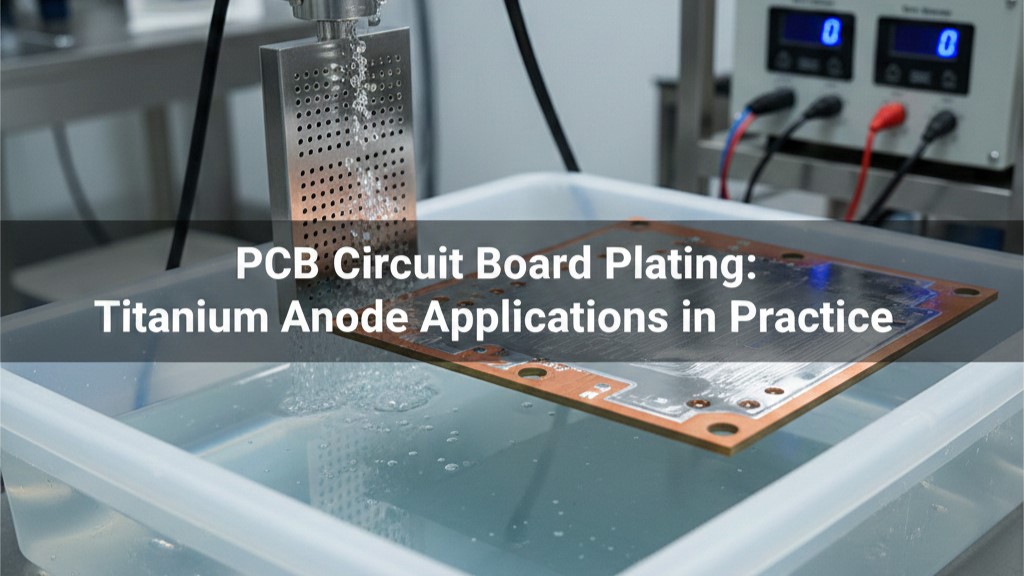
PCB Circuit Board Plating: Titanium Anode Applications in Practice
Foreword: As the PCB industry develops towards higher density and finer features, traditional soluble anodes are increasingly unable to meet the stringent requirements for plating uniformity and consistency in modern HDI boards. This article systematically explains the technical principles, application scenarios, and economic benefits of titanium anodes in PCB electroplating, aiming to help technical decision-makers in PCB manufacturing comprehensively evaluate this upgrade solution.
This article is suitable for: PCB manufacturing engineers, electroplating line supervisors, purchasing managers, factory technical directors, and all professionals concerned with improving electroplating processes.
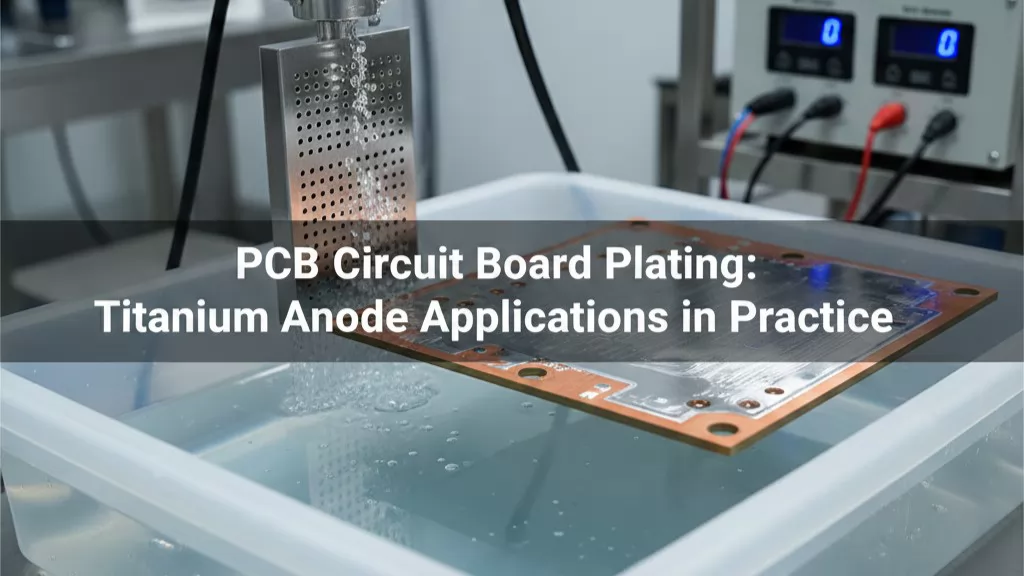
Introduction: The Evolution of PCB Plating Technology
The printed circuit board industry faces unprecedented challenges as devices become smaller, faster, and more complex. Modern high-density interconnect (HDI) boards require copper plating with exceptional uniformity across microscopic features, demanding equipment that can deliver consistent results batch after batch. This technological reality has catalyzed a significant shift in anode technology, moving away from traditional soluble lead-based anodes toward advanced dimensionally stable anodes (DSA) constructed from titanium substrates with specialized catalytic coatings.
Titanium anodes have emerged as the preferred solution for PCB manufacturers seeking to improve plating quality while reducing operational costs and environmental impact. Unlike their soluble counterparts, these insoluble anodes maintain their dimensional stability throughout their service life, ensuring consistent current distribution and deposit thickness across every panel processed. The economic and technical advantages have made titanium anodes an essential component in modern vertical continuous plating (VCP) lines and advanced horizontal plating systems.
What Are Titanium Anodes in PCB Manufacturing?
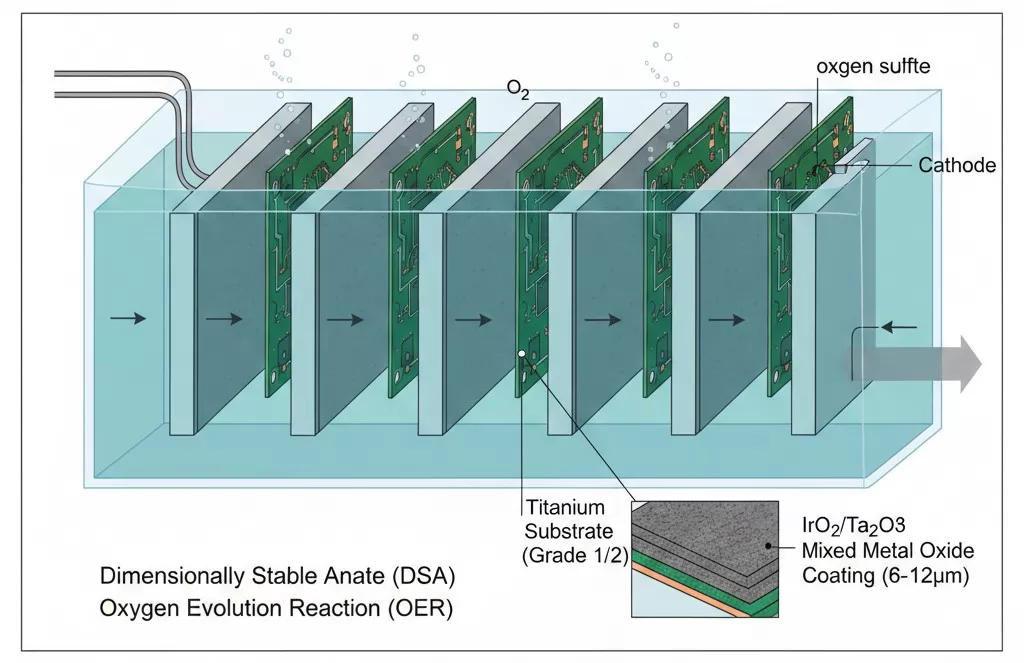
Titanium anodes used in PCB circuit board plating represent a sophisticated class of electrode technology known as Dimensionally Stable Anodes (DSA) or Mixed Metal Oxide (MMO) anodes. These electrodes consist of a titanium substrate, typically Grade 1 or Grade 2 commercial purity titanium, coated with a catalytically active metal oxide layer. The most common coating system for PCB copper plating applications combines iridium oxide (IrO₂) with tantalum oxide (Ta₂O₅), creating a mixed metal oxide layer that exhibits exceptional electrochemical performance in acidic copper sulfate plating baths.
The fundamental distinction between titanium anodes and traditional soluble anodes lies in their electrochemical behavior. Soluble anodes, such as phosphorized copper balls, actively dissolve during the plating process, releasing copper ions directly into the bath to replenish those consumed at the cathode. In contrast, titanium anodes remain chemically inert during operation, serving primarily to conduct current and facilitate the oxygen evolution reaction (OER) that balances charge in the electrochemical cell. This insolubility provides the dimensional stability from which DSA anodes derive their name, as the anode-to-cathode distance remains constant throughout production runs.
The coating technology employed on titanium anodes determines their operational characteristics and suitability for specific applications. Iridium-tantalum mixed metal oxide coatings provide outstanding catalytic activity for oxygen evolution in sulfuric acid-based copper plating baths, operating efficiently at current densities ranging from 100 to 300 A/m² in standard applications, with some specialized configurations supporting operation up to 500-800 A/m². The coating thickness typically ranges from 6 to 12 micrometers, providing a service life measured in years of continuous operation before regeneration or replacement becomes necessary.
Technical Advantages Over Traditional Soluble Anodes
Dimensional Stability and Plating Uniformity
The most significant advantage of titanium anodes lies in their ability to maintain consistent geometry throughout their operational life. Soluble copper anodes gradually erode during operation, changing shape and size with every ampere-hour of plating. This erosion creates a moving target for process engineers, as the anode-to-cathode distance and electric field distribution continuously evolve. The resulting variation in current distribution translates directly into thickness non-uniformity across the plated surface, creating challenges for meeting the tight tolerance requirements of modern PCB designs.
Titanium anodes eliminate this source of process variation entirely. Because the anode material does not dissolve, the physical geometry of the electrode remains constant from the first panel plated to the last. This stability enables precise control over current distribution, which translates directly into more uniform copper deposit thickness across the entire panel surface. For manufacturers producing boards with fine-line features and high-aspect-ratio through-holes, this consistency is not merely desirable—it is essential for achieving acceptable yields. The stable anode geometry also enables more predictable throwing power behavior, simplifying process development and reducing the need for ongoing adjustment.
Bath Purity and Reduced Contamination
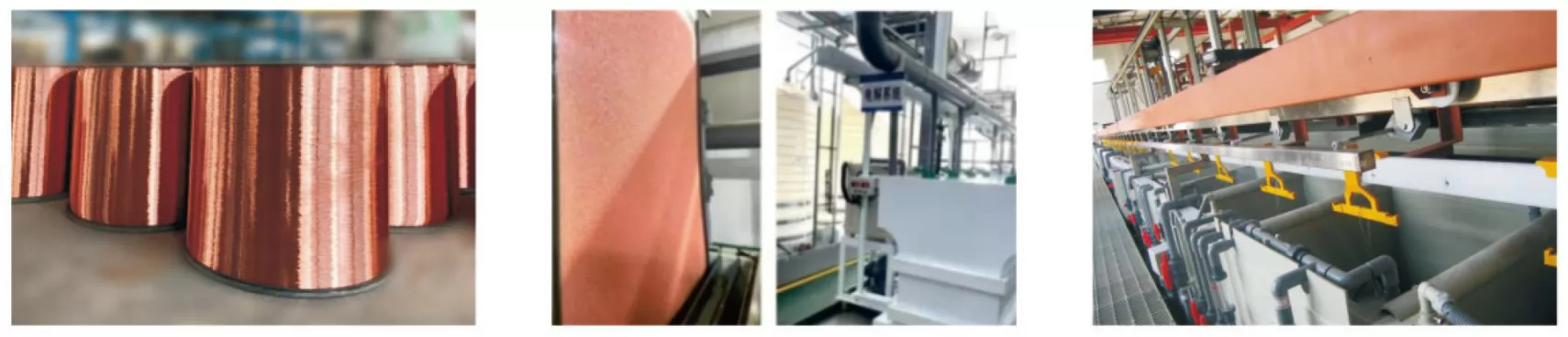
Soluble copper anodes generate significant quantities of anode sludge, also known as anode mud, as impurities within the copper dissolve preferentially during electrolysis. This sludge consists primarily of insoluble metal compounds, including phosphorus and various trace metals, which accumulate in the plating bath and create numerous operational problems. The sludge must be filtered continuously to prevent contamination of the plated surface, and periodic bath dumps become necessary when impurity levels exceed acceptable limits. The filtration requirements alone represent a substantial ongoing cost in terms of filter cartridges, labor, and machine downtime.
Titanium anodes produce virtually no sludge during operation, dramatically improving bath purity and reducing the filtration burden on the plating system. Without the continuous generation of anode mud, the plating bath maintains its chemical composition more consistently, reducing the frequency of bath analysis and adjustment. The elimination of sludge-related contamination also contributes to improved deposit quality, with fewer surface defects and more consistent mechanical properties in the plated copper. For manufacturers targeting high-reliability applications in aerospace, medical devices, or automotive electronics, the improved purity profile of insoluble anode systems provides a meaningful competitive advantage.
Lower Operating Voltage and Energy Efficiency
The electrochemical characteristics of iridium-tantalum coated titanium anodes result in lower overpotential for the oxygen evolution reaction compared to traditional lead alloy anodes. This reduced overpotential translates directly into lower cell voltage for the same current density, reducing energy consumption throughout the plating process. Given that electroplating represents one of the most energy-intensive operations in PCB manufacturing, the cumulative savings from reduced voltage can be substantial over the course of a year of continuous production.
Additionally, the stable operating characteristics of titanium anodes eliminate the gradual voltage increase that typically occurs with soluble anodes as they corrode and develop passive surface layers. This voltage stability simplifies power supply configuration and reduces the need for voltage compensation as the anode ages. The combination of inherently lower operating voltage and absence of voltage drift creates a more energy-efficient process that operates consistently without requiring ongoing process adjustment.
Extended Service Life and Reduced Maintenance
While the initial cost of titanium anodes exceeds that of soluble copper anodes, their extended service life often results in lower total cost of ownership over multi-year periods. A properly coated titanium anode can provide several years of reliable service in PCB plating applications, compared to the continuous replacement cycle required for soluble anodes. Manufacturers using soluble anodes must maintain inventory of copper balls, manage the loading and unloading of anode baskets, and deal with the associated labor and downtime costs. Titanium anodes eliminate most of these recurring expenses once the initial investment is made.
The maintenance requirements for titanium anodes are also substantially different from soluble systems. Rather than replacing consumed anode material, operators need only periodically clean the anode surface to remove any accumulated debris and verify that the coating remains intact. When coating degradation eventually occurs after extended service, the anode can often be re-coated rather than replaced entirely, further reducing the long-term cost of ownership. This regenerative capability distinguishes titanium anodes as a sustainable solution that aligns with both economic and environmental objectives.
Key Application Scenarios in PCB Manufacturing
Vertical Continuous Plating (VCP) Systems
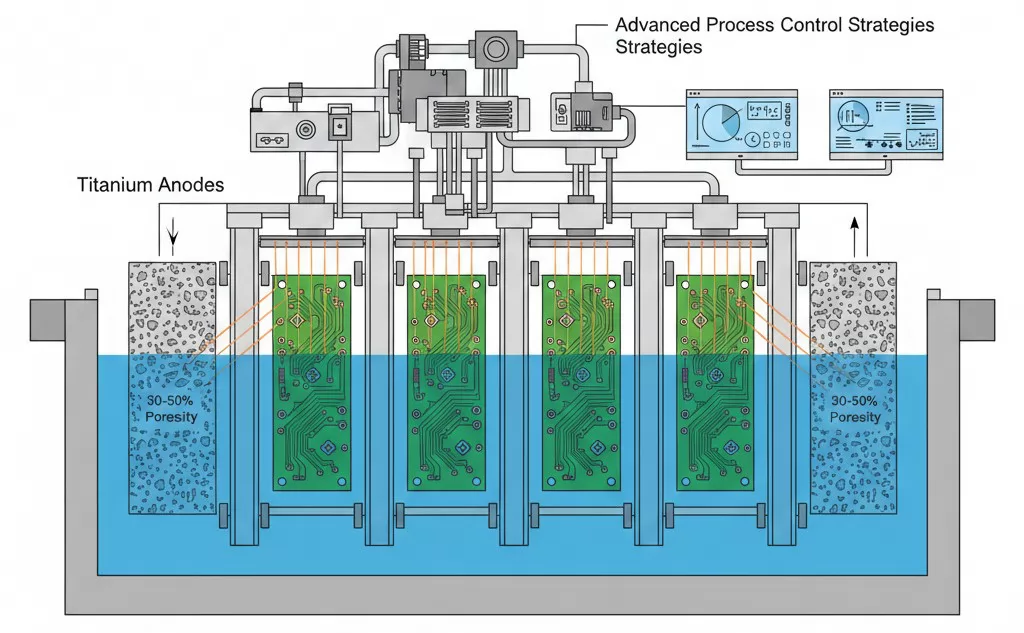
Vertical Continuous Plating has become the industry standard for high-volume PCB production, offering superior thickness control, reduced chemical consumption, and improved consistency compared to older vertical dump plating methods. VCP lines move panels continuously through the plating cell while maintaining precise control over panel position, current density, and solution chemistry. This continuous process places unique demands on all equipment components, including the anodes that must deliver consistent performance throughout extended production runs.
Titanium anodes have become the dominant anode choice in modern VCP lines, particularly for through-hole plating and pattern plating applications. The dimensional stability of titanium anodes enables the precise current distribution control required to achieve uniform coverage in high-aspect-ratio holes, where traditional plating processes often struggle to maintain adequate throwing power. Many VCP systems utilize porous titanium plate anodes with porosity levels between 30% and 50%, which increase the effective anode surface area and improve current distribution uniformity across the plating cell width.
The integration of titanium anodes in VCP lines also enables advanced process control strategies that would be impractical with soluble anodes. Because the anode geometry remains constant, the relationship between applied current and resulting deposit thickness remains stable, enabling more accurate process modeling and control. This stability supports the implementation of sophisticated plating programs that vary current density across different zones of the panel to compensate for edge effects and achieve optimal thickness distribution across the entire board surface.
Horizontal Plating Systems
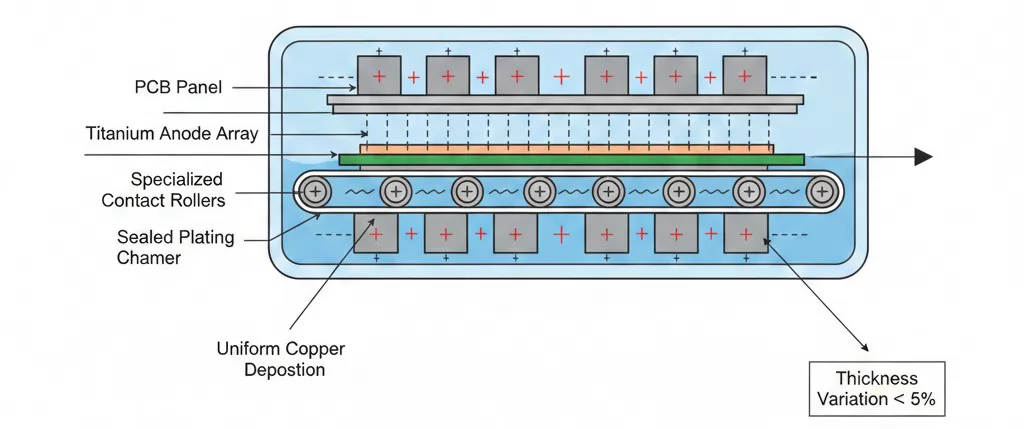
Horizontal plating systems represent the most advanced technology for PCB copper deposition, offering the highest levels of thickness control and uniformity for demanding applications. In horizontal plating lines, panels travel horizontally through a sealed plating chamber while electrical contact is maintained through specialized contact systems. The horizontal orientation and continuous transport create specific requirements for anode design and positioning that favor the use of titanium anodes.
The anode configuration in horizontal plating systems typically utilizes arrays of titanium anodes positioned precisely relative to the panel transport path. The stability of titanium anodes enables tight tolerances in anode positioning without concern for dimensional changes during operation. This precision positioning contributes to the exceptional uniformity that horizontal systems can achieve, with thickness variations often held below 5% across the panel width. The absence of anode sludge also reduces the risk of contamination in these enclosed systems, where maintenance access is more limited than in vertical cells.
Precious Metal Plating Applications
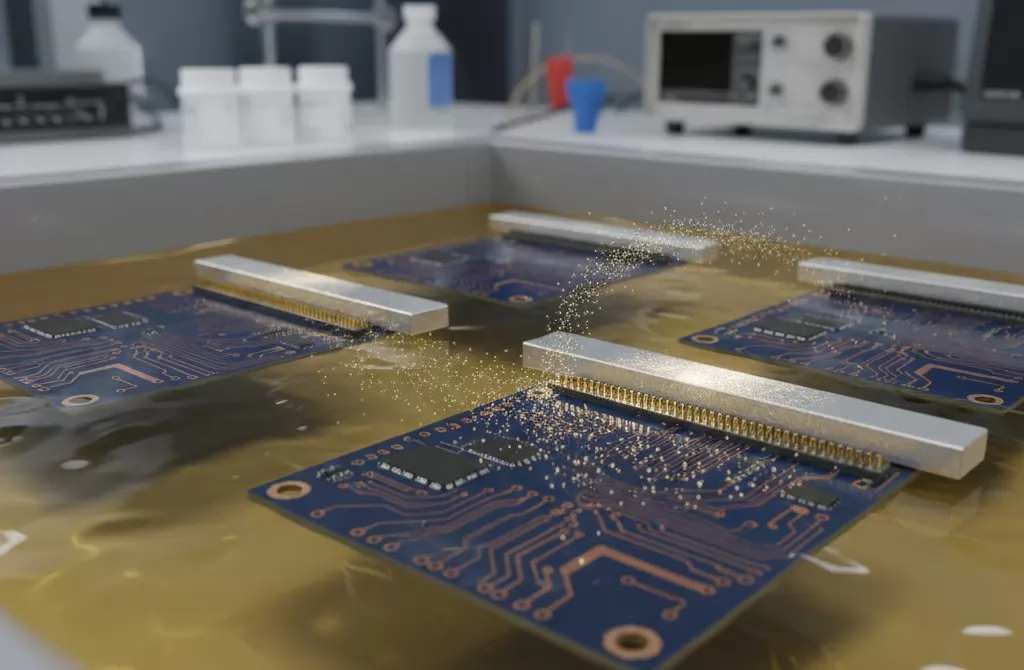
Titanium anodes extend beyond copper plating to serve critical roles in precious metal finishing processes used in PCB manufacturing. Gold plating for connector fingers, immersion silver applications, and other precious metal deposits often utilize platinized titanium anodes, which combine the dimensional stability of titanium substrates with the exceptional catalytic properties of platinum for the specific electrochemical reactions involved. These specialized anodes enable consistent precious metal deposition while minimizing base metal dissolution that could contaminate the expensive plating solutions.
The investment in premium anode materials for precious metal plating applications is justified by the value of the metals being deposited and the critical nature of the finished surfaces. Connector surfaces requiring gold plating must maintain reliable electrical contact through thousands of insertion cycles, making deposit quality and consistency essential for product reliability. Titanium anodes with appropriate precious metal coatings provide the performance consistency required for these demanding applications while reducing the risk of bath contamination that could compromise product quality.
High-Speed Pulse Plating Applications
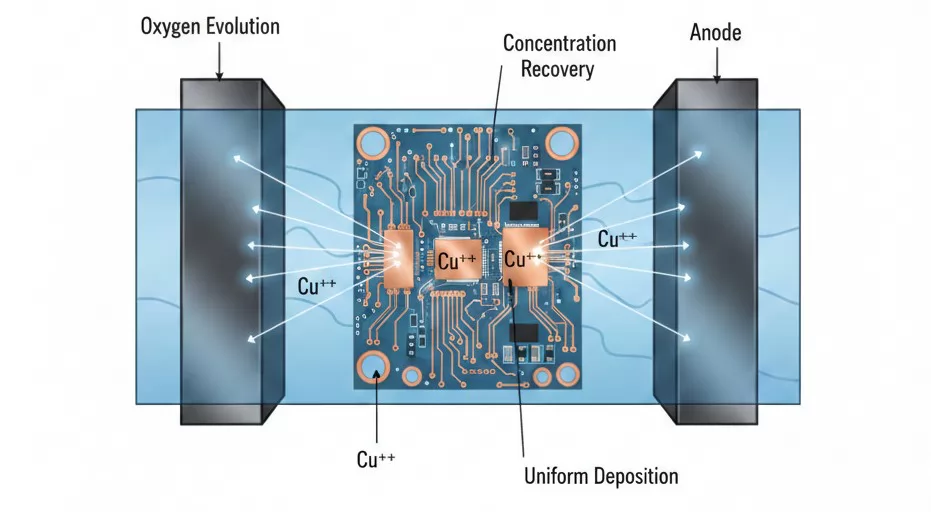
The continuing miniaturization of PCB features has driven adoption of pulse plating technologies that offer improved throwing power and finer grain structure compared to conventional DC plating. Pulse plating applies current in controlled on-off cycles, creating periodic concentration recovery at the cathode surface that enables more uniform deposition in complex geometries. This advanced process places specific demands on anode materials, as the rapid current reversal and high peak current densities can accelerate coating degradation in less robust anode systems.
Titanium anodes with iridium-based coatings have demonstrated excellent performance in reverse pulse copper plating applications, maintaining stable operation at high current densities without passivation. The catalytic coating provides the necessary overpotential for oxygen evolution during the forward pulse while supporting the reverse reaction during the off-time. This compatibility with pulse plating waveforms enables PCB manufacturers to leverage the throwing power advantages of pulse technology while maintaining the consistency and reliability benefits of insoluble anode systems.
Cost-Benefit Analysis and Return on Investment
Evaluating the economic impact of titanium anodes requires consideration of both direct costs and the indirect benefits that affect overall manufacturing economics. While titanium anodes command a higher initial purchase price than soluble copper anodes, the total cost of ownership often favors titanium solutions in production environments with significant plating volume and quality requirements.
| Cost Factor | Soluble Anode System | Titanium Anode System |
|---|---|---|
| Initial Equipment Cost | Lower (basic anode baskets) | Higher (coated titanium electrodes) |
| Consumable Anode Cost | Continuous copper ball purchase | Minimal (replacement only on failure) |
| Energy Consumption | Higher (increasing voltage over time) | Lower (stable, optimized voltage) |
| Filtration Maintenance | High (continuous sludge removal) | Low (minimal particle generation) |
| Bath Maintenance Frequency | Frequent (contamination buildup) | Reduced (improved bath stability) |
| Downtime for Anode Service | Regular (basket loading/unloading) | Minimal (periodic inspection only) |
| Deposit Quality Consistency | Variable (anode shape changes) | Consistent (dimensional stability) |
| Scrap Rate Impact | Higher (thickness variation) | Lower (improved uniformity) |
The payback period for titanium anode investment varies depending on production volume, labor costs, and quality requirements, but many manufacturers achieve full return on investment within 18 to 36 months of installation. Beyond the direct cost factors, the improved deposit consistency enabled by titanium anodes can reduce scrap rates and improve yields, creating additional economic benefits that compound over time. For high-reliability PCB production where rejection costs are high, the quality improvement benefits alone may justify the investment in insoluble anode technology.
Long-term operational savings accumulate from multiple sources including reduced energy consumption, lower chemical usage for bath treatment, decreased filter replacement costs, and reduced labor for anode maintenance. A typical VCP line processing 5,000 square meters of panel area per month might consume 500 kg or more of soluble copper anodes annually, representing both a direct material cost and the labor burden of anode management. Converting such a line to titanium anodes eliminates the recurring anode material cost while reducing the frequency of production interruptions for maintenance activities.
Implementation Considerations and Selection Guidelines
Coating System Selection
Selecting the appropriate coating system for titanium anodes requires understanding the specific plating chemistry and operational parameters of the target application. For standard acid copper sulfate plating baths with sulfuric acid concentrations between 50 and 300 g/L, iridium-tantalum mixed metal oxide coatings provide optimal performance and service life. The iridium oxide component delivers the necessary catalytic activity for oxygen evolution, while the tantalum oxide stabilizer improves coating adhesion and extends operational life by preventing the gradual degradation that occurs with pure iridium coatings in some applications.
The coating formulation may require adjustment for non-standard bath chemistries or operating conditions. Some plating operations utilize alternative acid systems or elevated temperatures that place additional demands on anode coatings. Consulting with anode suppliers regarding specific application requirements ensures selection of a coating system optimized for the intended use rather than a generic solution that may provide substandard performance. The coating thickness and application quality also vary between suppliers, making supplier qualification an important part of the selection process.
Current Density Optimization
Operating current density significantly affects both plating results and anode service life, requiring careful optimization for each specific application. Most iridium-tantalum coated titanium anodes perform optimally at current densities between 100 and 300 A/m² for standard copper sulfate plating, though many installations successfully operate at higher densities when process requirements demand increased throughput. Operating significantly above the recommended current density accelerates coating degradation, potentially reducing service life and increasing long-term costs despite the productivity gains from higher throughput.
The relationship between current density and coating life is not linear—doubling the current density typically reduces coating life by more than half due to the accelerated electrochemical reactions at the anode surface. Process engineers must balance the competing objectives of throughput, deposit quality, and anode longevity when establishing operating parameters. Some manufacturers compromise by operating at higher current densities with more frequent anode rotation or recoating schedules, which may provide economic advantages depending on the specific cost structure of the operation.
Copper Replenishment Strategy
Because insoluble titanium anodes do not dissolve to replenish copper ions consumed during plating, manufacturers must implement alternative strategies for maintaining bath metal content. Most installations utilize soluble copper spheres in separate anode baskets positioned to supplement the titanium anodes, with the soluble copper providing the metal source while titanium anodes manage the current distribution and throwing characteristics. The ratio between soluble and insoluble anode area affects plating performance and must be optimized for each specific installation.
Advanced installations may utilize copper oxide or copper carbonate addition systems that automatically maintain bath copper concentration without consuming soluble anodes. These chemical replenishment systems provide precise control over copper concentration while eliminating the dimensional variation associated with soluble anode consumption. The capital investment in automated replenishment systems may be justified by the improved process stability and reduced consumable costs in high-volume production environments.
Industry Trends and Future Developments
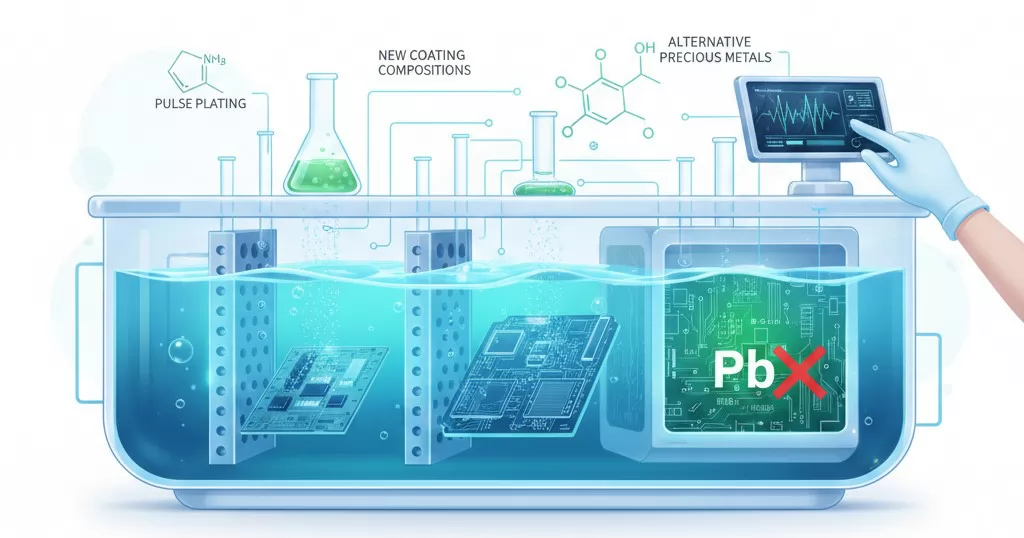
The PCB industry continues to evolve toward smaller features, more layers, and higher reliability requirements, driving continued advancement in plating technology. These trends favor insoluble anode systems that can deliver the consistency and control demanded by advanced manufacturing processes. The transition from organic to inorganic surface finishes for lead-free assembly creates additional opportunities for titanium anode applications in precious metal finishing processes.
Environmental regulations affecting both plating waste disposal and workplace exposure are increasingly influencing anode material selection. Lead-based anodes used in traditional systems create compliance challenges for waste treatment and require handling precautions that add to operational complexity. Titanium anodes eliminate lead from the plating cell entirely, simplifying waste treatment and reducing environmental compliance burden. This regulatory advantage may become increasingly important as environmental standards continue to tighten globally.
Research and development in anode coating technology continues to improve performance and reduce costs for titanium-based electrodes. New coating compositions incorporating alternative precious metals and advanced application techniques promise longer service life and improved efficiency. The ongoing development of pulse and reverse pulse plating processes also creates opportunities for specialized anode designs optimized for these advanced waveforms. Manufacturers who invest in understanding and adopting these emerging technologies position themselves to meet future manufacturing challenges while maintaining competitive cost structures.
Conclusion: Strategic Value for PCB Manufacturers
Titanium anodes have transitioned from an emerging technology to a standard solution for PCB circuit board plating, offering measurable advantages in deposit quality, operational efficiency, and total cost of ownership. The dimensional stability that defines these electrodes enables process control precision that soluble anode systems cannot match, making titanium anodes essential for manufacturers serving demanding markets in consumer electronics, automotive systems, aerospace, and medical devices.
The decision to transition to titanium anode technology should be based on careful analysis of specific production requirements, volume levels, and quality standards. For most high-volume PCB manufacturers, the economic and technical benefits of insoluble anode systems provide compelling justification for investment. The initial cost premium is recovered through reduced consumable expenses, lower energy consumption, decreased maintenance labor, and improved yields that compound over the multi-year service life of properly maintained titanium electrodes.
As PCB technology continues its trajectory toward finer features and higher reliability requirements, the advantages of titanium anode systems will become increasingly pronounced. Manufacturers who adopt this technology now position themselves to meet future technical challenges while benefiting from the operational advantages that have made titanium anodes the preferred choice for leading-edge PCB production facilities worldwide.
Ready to Upgrade Your Plating Performance?
Transform your PCB manufacturing with titanium anode technology. Our engineering team provides custom sizing, specialized coating options, and comprehensive technical support.
✓ Custom Dimensions ✓ Technical Support ✓ Fast Response
Get Free Consultation
Expert support within 24 hours
0
Comments
Leave a Comment
Your email address will not be published. Required fields are marked *
Name can't be empty
Email error!
Message can't be empty
😍
😜
😳
😌
😄
😘
😝
😒
😃
😚
😚
😛
😟
😧
😀
😉
😓
😱
😤
😣
😂
😥
😩
😠
😢
😭
😰
😨
😡
😆
😪
😅
😐
😇
😋
😴
👿
😕
😏
😷
😵
😟
😮
😯
😑
👧
👴
😧
😬
😾
👶
👱
👵
👸
🙀
👺
👦
👩
👨
😽
😿
🙈
💩
💥
💤
😼
😹
🙉
🔥
✨
💦
👎
✌
👆
👈
💪
💹
👍
👊
💴
💶
💷
💸
👉
💵
🙏
🌎
🏧
👏
💳
👇
💑
🙆
🙅
💁
👫
👭
🙎
🙇
👑
👔
Submit Comment
Most Popular
-
 Oct 29, 2025What is a Titanium Anode (Complete Guide)
 -
 Dec 19, 2025Titanium Anode Lifespan Testing: How to Accurately Predict Service Life
 -
 Dec 25, 2025Titanium Anodes vs Graphite Anodes: Service Life and Cost Analysis
 -
 Dec 17, 2025MMO Coated Titanium Anodes vs Traditional Anodes: Complete Comparison


Laster Blogs
-
 Jan 22, 2026PCB Circuit Board Plating: Titanium Anode Applications in Practice
 -
 Jan 13, 2026Automotive Parts Plating: How Titanium Anodes Significantly Enhance Coating Quality and Performance
 -
 Jan 05, 2026Electrochemical Solutions for Hospital Wastewater Treatment
 -
Dec 25, 2025Titanium Anodes vs Graphite Anodes: Service Life and Cost Analysis


Set A Consultation Today
Name can't be empty
Email error!
Send Your Message
*We respect your confidentiality and all
information are protected.
