The Definitive Buyer’s Guide to MMO Coated Titanium Anodes (2026 Edition)
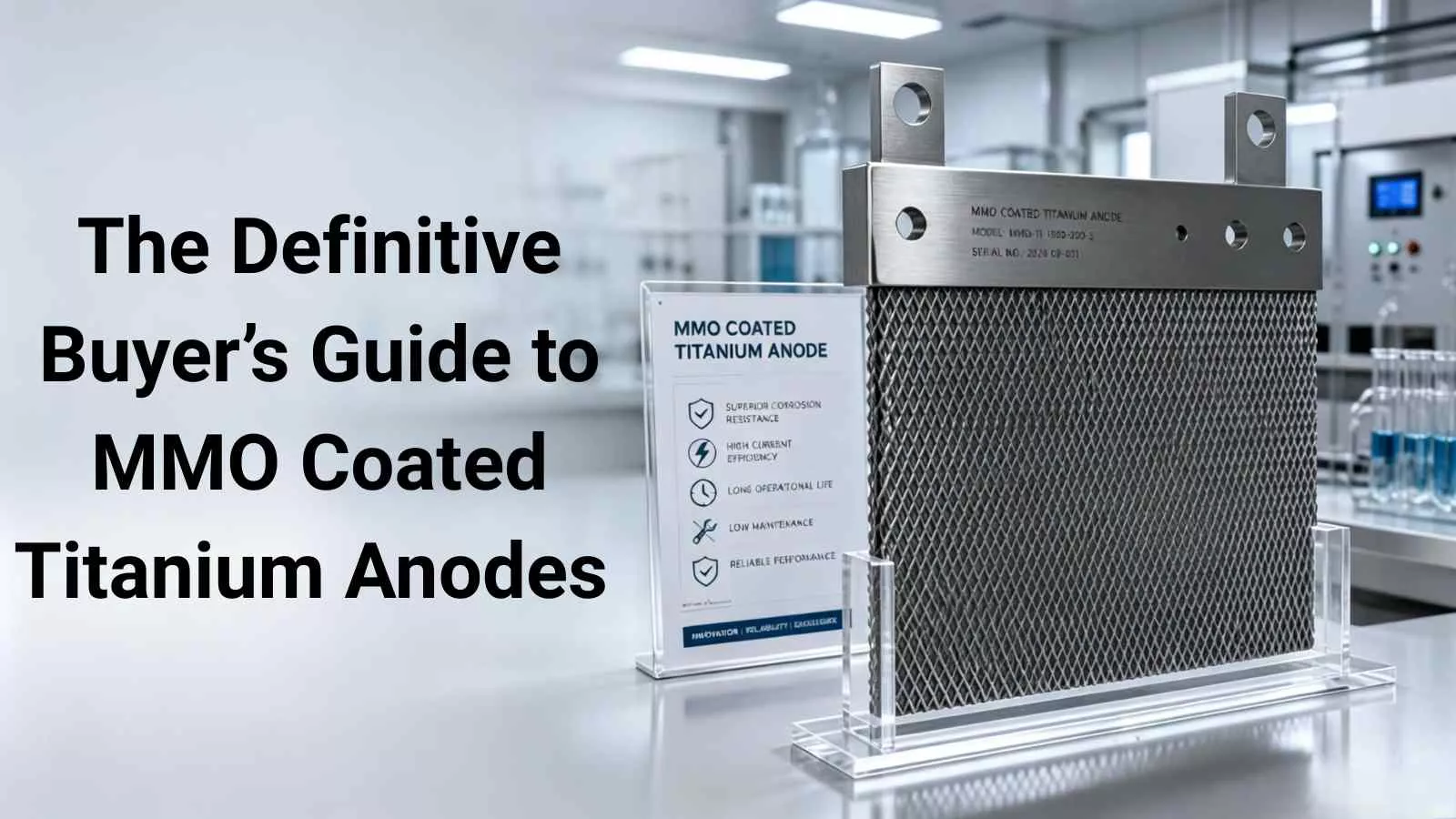
In industrial electrochemistry, electrode selection directly dictates cell voltage, chemical bath stability, maintenance cycles, and overall operating expenditure (OpEx). While legacy materials like lead alloys and graphite served early industrial setups, modern processing plants demand higher energy efficiency, dimensional stability, and zero electrolyte contamination.
Mixed Metal Oxide (MMO) coated titanium anodes—commonly known as Dimensionally Stable Anodes (DSA®)—have become the global industry standard across water treatment, chlor-alkali, electroplating, and cathodic protection. However, choosing the wrong coating formulation or specifying insufficient metal loading can lead to premature anode passivating and expensive operational downtime.
This definitive buyer’s guide outlines the technical architecture of MMO anodes, compares their long-term Return on Investment (ROI) against traditional electrodes, evaluates critical selection parameters (such as Ru-Ir vs. Ir-Ta coatings), and provides a vendor evaluation roadmap for 2026.
Technical Architecture of MMO Titanium Anodes
Understanding how an MMO titanium anode operates requires examining the synergy between its structural titanium substrate and its catalytic noble metal oxide coating.
Layered Structure Breakdown
- Electrolytic Solution: Chlorine or Oxygen Evolution Reaction environment.
- Precious Metal Oxide Coating (Ru-Ir / Ir-Ta Catalytic Layer): Provides low overpotential and high catalytic activity.
- Interfacial Titanium Oxide Layer: Forms a self-healing passivation barrier for corrosion defense.
- Substrate Base (ASTM B265 Grade 1 / Grade 2 Titanium): Delivers structural integrity, high conductivity, and mechanical strength.
Substrate Engineering: Grade 1 vs. Grade 2 Titanium Base
The substrate serves as the structural foundation and electrical conductor. High-performance anodes utilize ASTM B265 Grade 1 or Grade 2 unalloyed titanium:
- Grade 1 Titanium: Offers maximum ductility and formability, making it ideal for intricate shapes like expanded mesh, slotted plates, and tubular geometries.
- Grade 2 Titanium: Provides higher mechanical yield strength for structural integrity in heavy-scale installations and high-flow cells.
Under anodic polarization, titanium forms a self-healing passive oxide film (TiO₂) that isolates the metal from chemical attack, ensuring long-term dimensional stability even in aggressive acid or brine baths.
Electrocatalytic Coating Mechanism: How Oxide Formulations Work
Raw titanium alone cannot efficiently pass electrical current into an electrolyte because its passive oxide layer acts as an insulator. To overcome this, microscopic layers of precious metal oxides (such as Iridium, Ruthenium, Tantalum, or Titanium oxides) are applied via thermal decomposition.
These mixed oxides create an electrochemically active surface with extremely low overpotential for oxidation reactions. During electrolysis, current flows efficiently through the noble metal oxide surface while the underlying titanium base maintains its fixed dimensions over years of continuous operation.
MMO vs. Legacy Anodes: Cost & Performance Analysis
Transitioning from traditional materials to MMO titanium anodes represents a shift from a "consumable component" mindset to a "long-term infrastructure investment."
| Performance Parameter | MMO Coated Titanium Anode | Lead Alloy (Pb-Sb / Pb-Ag) | Best For | Best For |
|---|---|---|---|---|
| Dimensional Stability | Fixed (Zero Deformation) | Deforms / Sloughs Sludge | Erodes / Disintegrates | Erodes / Consumable |
| Electrolyte Contamination | Zero (Clean Operation) | High (Lead Sludge/Contamination) | High (Carbon Fine Particles) | Moderate |
| Oxygen/Chlorine Overpotential | Exceptionally Low | High | High | High |
| Energy Consumption | Low (Optimized Cell Voltage) | High (High Internal Resistance) | High | High |
| Service Lifespan | 5 to 20+ Years | 6 to 18 Months | 3 to 12 Months | 2 to 5 Years |
| Weight & Handling | Lightweight (~4.5 g/cm³) | Very Heavy (~11.3 g/cm³) | Moderate | Very Heavy |
Long-Term ROI & Total Cost of Ownership (TCO)
While lead or graphite anodes carry lower initial purchase prices (CapEx), their Total Cost of Ownership is substantially higher due to three hidden costs:
- Power Consumption (kWh): MMO coatings operate at significantly lower overpotentials compared to lead or graphite. In continuous industrial electrolysis, a cell voltage reduction of just 0.3V to 0.5V translates into hundreds of thousands of dollars in annual power savings.
- Maintenance Downtime: Legacy anodes require frequent shut-downs for replacement, scaling removal, and sludge filtration. MMO anodes operate continuously for years without deformation or sloughing.
- Bath & Product Quality: Lead contamination or graphite particulates ruin chemical baths and lower the purity of electroplated metals or treated water, forcing frequent electrolyte dumps.
Critical Selection Criteria for MMO Titanium Anodes
Selecting the correct anode requires matching the coating chemistry, loading weight, and mechanical design to your specific process chemistry.
Ru-Ir vs. Ir-Ta Coating Systems: Matching Chemistry to Reaction
The single most critical decision is selecting the correct noble metal formulation for your primary anodic reaction:
- Ruthenium-Iridium (Ru-Ir) Coatings: Optimized for Chlorine Evolution Reaction (CER).
- Iridium-Tantalum (Ir-Ta) Coatings: Optimized for Oxygen Evolution Reaction (OER).
1. Ruthenium-Iridium Oxide Systems (RuO₂-IrO₂-TiO₂)
- Primary Reaction: Chlorine Evolution Reaction (CER).
- Operating Environment: Neutral to alkaline saline solutions, brine, chlor-alkali cells, and sodium hypochlorite generators.
- Key Characteristic: High catalytic selectivity for chlorine generation with low gas bubble resistance.
2. Iridium-Tantalum Oxide Systems (IrO₂-Ta₂O₅)
- Primary Reaction: Oxygen Evolution Reaction (OER).
- Operating Environment: Highly acidic media (sulfuric acid, nitric acid), high-current electroplating, and Cathodic Protection (ICCP).
- Key Characteristic: Extreme resistance to acid attack and high oxygen evolution overpotential stability.
Current Density & Precious Metal Loading (g/m²)
Anode lifespan is directly linked to operating current density (A/m²) and total precious metal oxide loading per unit area:
- Light Applications (< 500 A/m²): E.g., swimming pool chlorinators or shallow cathodic protection. Requires 6 - 10 g/m² precious metal content.
- Heavy Industrial Applications (1,500 - 10,000+ A/m²): E.g., high-speed copper foil electrodeposition or chlor-alkali production. Requires 20 - 40+ g/m² precious metal content.
Electrolyte Hazards: Fluorides and Organics
Trace fluoride ions (F⁻) pose a severe threat to titanium anodes. Fluoride concentrations above 5 ppm can dissolve the titanium's protective TiO₂ oxide film, causing the precious metal coating to peel away from the base metal. If fluorides are present in your process, specialized barrier coatings or modified titanium alloys must be specified.
Primary Industrial Applications for MMO Titanium Anodes
1. Water & Wastewater Treatment
Organic COD Removal
Ammonia Oxidation
Industrial Disinfection & Electro-Fenton Processes
2. Chlor-Alkali & Sodium Hypochlorite Generation
Chlor-Alkali Electrolysis Cells
On-Site Hypochlorite Generators
Seawater Electrolysis & Ballast Water Treatment
3. Metal Finishing & Cathodic Protection
PCB Copper Plating & Precious Metal Finishing (Gold, Rhodium)
Impressed Current Cathodic Protection (ICCP for Pipelines, Marine & Concrete)
How to Evaluate a Reliable MMO Anode Manufacturer
Because microscopic coating defects or improper thermal sintering cannot be detected by visual inspection alone, vendor selection directly impacts product reliability.
Key Verification & Quality Assurance Metrics
When evaluating an anode manufacturer, verify that they adhere to rigorous testing protocols:
- Accelerated Life Testing (ALT): Life expectancy testing performed according to NACE TM0108 / NACE TM0294 standards in acidic media to project real-world service lifespan.
- X-Ray Fluorescence (XRF) Coating Thickness Measurement: Non-destructive testing ensuring precise, uniform noble metal distribution (g/m²) across complex surface areas.
- Substrate Preparation Verification: Ensuring controlled sandblasting and chemical etching steps to achieve optimal mechanical anchoring between the titanium base and oxide layers.
Manufacturer Spotlight: Shaanxi Jinhan Rare Precious Metal Co., Ltd. (JH)
For global procurement managers and electrochemical engineers seeking high-precision electrode manufacturing, Shaanxi Jinhan Rare Precious Metal Co., Ltd. (JH) represents a leading technical vendor in the titanium anode industry.
Located in China's titanium manufacturing hub, JH integrates end-to-end production—from high-purity titanium substrate fabrication and precision machining to proprietary precious metal oxide thermal synthesis.、
Why Electrochemical Engineers and Procurement Managers Choose JH:
1. Complete Substrate Customization:
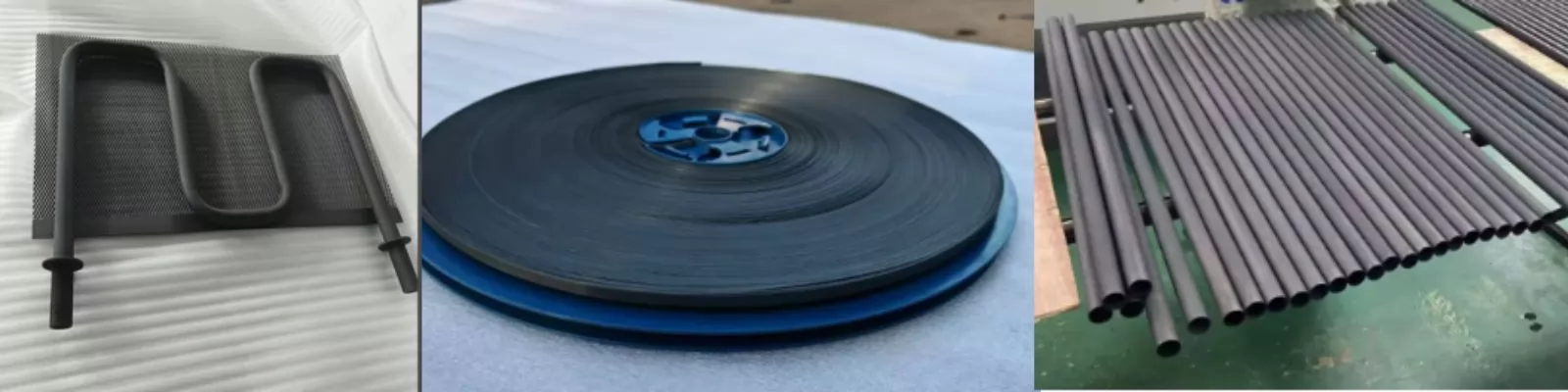
JH manufactures custom geometries tailored to specific cell designs, including expanded mesh, perforated plates, tubular anodes, ribbon/wire forms, and complex internal tank assemblies.
2. Application-Specific Coating Formulations:
Instead of off-the-shelf compromises, JH's engineering team custom-formulates noble metal ratios (Ru-Ir, Ir-Ta, Platinum, or Lead Dioxide) matched to your exact current density, pH level, operating temperature, and electrolyte composition.
3. Strict Quality Control & Lifespan Testing:
Every production batch undergoes XRF coating thickness verification, thermal shock testing, and NACE-compliant Accelerated Life Testing (ALT) to ensure predictable field operational lifespans.
4. Cost-Effective Refurbishment Program:
JH offers anode stripping and recoating services for worn assemblies, helping industrial plants maximize ROI by re-using active titanium substrates.
JH Core Technical Capabilities:
- Substrate Customization: Plate, Mesh, Tube, Rod, Ribbon, and Complex Sub-assemblies.
- Specialized Coating Formulations: Ru-Ir, Ir-Ta, Pt-Ti, and Lead Dioxide (PbO2).
- Complete Quality Assurance: XRF Thickness Verification & NACE Accelerated Lifespan Testing.
- Global Engineering Support: Bath Chemistry Analysis & Application-Specific Anode Specification.
JH offers customized engineering services for demanding global projects, providing dedicated MMO Coated Titanium Anode Solutions designed for specific current density requirements, electrolyte compositions, and cell geometry constraints.
Conclusion: Maximizing System Efficiency with the Right MMO Anode
Selecting the optimal MMO titanium anode is a strategic decision that drives long-term cell efficiency, protects chemical bath integrity, and delivers significant energy cost reductions. By carefully matching reaction chemistry (chlorine vs. oxygen evolution), calculating appropriate noble metal loadings, and partnering with an experienced manufacturer, industrial plants can achieve years of trouble-free operation.
Optimize Your Electrochemical Process with JH Ti Anode
Need technical guidance on coating formulations, custom anode geometry drawings, or an official factory-direct quote?
- Explore Custom MMO Anode Options: Visit JH MMO Titanium Anodes
- Consult Engineering Support: Contact the technical advisory team at Shaanxi Jinhan Rare Precious Metal Co., Ltd. to submit your cell parameters and request customized project estimates.
Need Help? We're Here For You!
Frequently Asked Questions (FAQ)
How long does an MMO coated titanium anode typically last?
Depending on the operating current density, electrolyte chemistry, temperature, and specified noble metal loading weight, high-quality MMO anodes last anywhere from 5 to more than 20 years in continuous service.
What is the main difference between Ru-Ir and Ir-Ta coatings?
Ru-Ir (Ruthenium-Iridium) coatings are designed for Chlorine Evolution Reactions (CER) in neutral, alkaline, or saline solutions. Ir-Ta (Iridium-Tantalum) coatings are designed for Oxygen Evolution Reactions (OER) in highly acidic or aggressive environments.
Can worn MMO titanium anodes be recoated?
Yes. Unlike consumable anodes, a worn titanium substrate can usually be stripped of residual oxides, re-etched, and recoated with fresh precious metal oxides, saving substantial capital compared to buying new base metal assemblies.
What parameters should I provide when requesting a custom anode quote?
To receive an accurate engineering recommendation, provide your primary anodic reaction (chlorine or oxygen evolution), operating current density (A/m²), electrolyte composition and pH, operating temperature, preferred anode dimensions/geometry, and target service lifespan.
0
Comments
Leave a Comment
Your email address will not be published. Required fields are marked *
Name can't be empty
Email error!
Message can't be empty
😍
😜
😳
😌
😄
😘
😝
😒
😃
😚
😚
😛
😟
😧
😀
😉
😓
😱
😤
😣
😂
😥
😩
😠
😢
😭
😰
😨
😡
😆
😪
😅
😐
😇
😋
😴
👿
😕
😏
😷
😵
😟
😮
😯
😑
👧
👴
😧
😬
😾
👶
👱
👵
👸
🙀
👺
👦
👩
👨
😽
😿
🙈
💩
💥
💤
😼
😹
🙉
🔥
✨
💦
👎
✌
👆
👈
💪
💹
👍
👊
💴
💶
💷
💸
👉
💵
🙏
🌎
🏧
👏
💳
👇
💑
🙆
🙅
💁
👫
👭
🙎
🙇
👑
👔
Submit Comment
Most Popular
-
 Dec 23, 2025Top 10 Titanium Anode Manufacturers in 2026
 -
 Dec 17, 2025MMO Coated Titanium Anodes vs Traditional Anodes: Complete Comparison
 -
 Oct 29, 2025What is a Titanium Anode (Complete Guide)
 -
 Dec 25, 2025Titanium Anodes vs Graphite Anodes: Service Life and Cost Analysis


Laster Blogs
-
 Sep 10, 2026Titanium Tubular Anode: Types, Applications, Specifications & Selection Guide
 -
 Jul 30, 2026The Definitive Buyer’s Guide to MMO Coated Titanium Anodes (2026 Edition)
 -
 Jul 28, 2026Platinum-Coated Titanium Anodes: A Practical Buyer’s Guide to Selection & Specification
 -
 Apr 20, 2026Iridium Oxide vs Ruthenium Oxide Coated Titanium Anodes: Which Coating Is Right for Your Application?


Set A Consultation Today
Name can't be empty
Email error!
Send Your Message
*We respect your confidentiality and all
information are protected.
